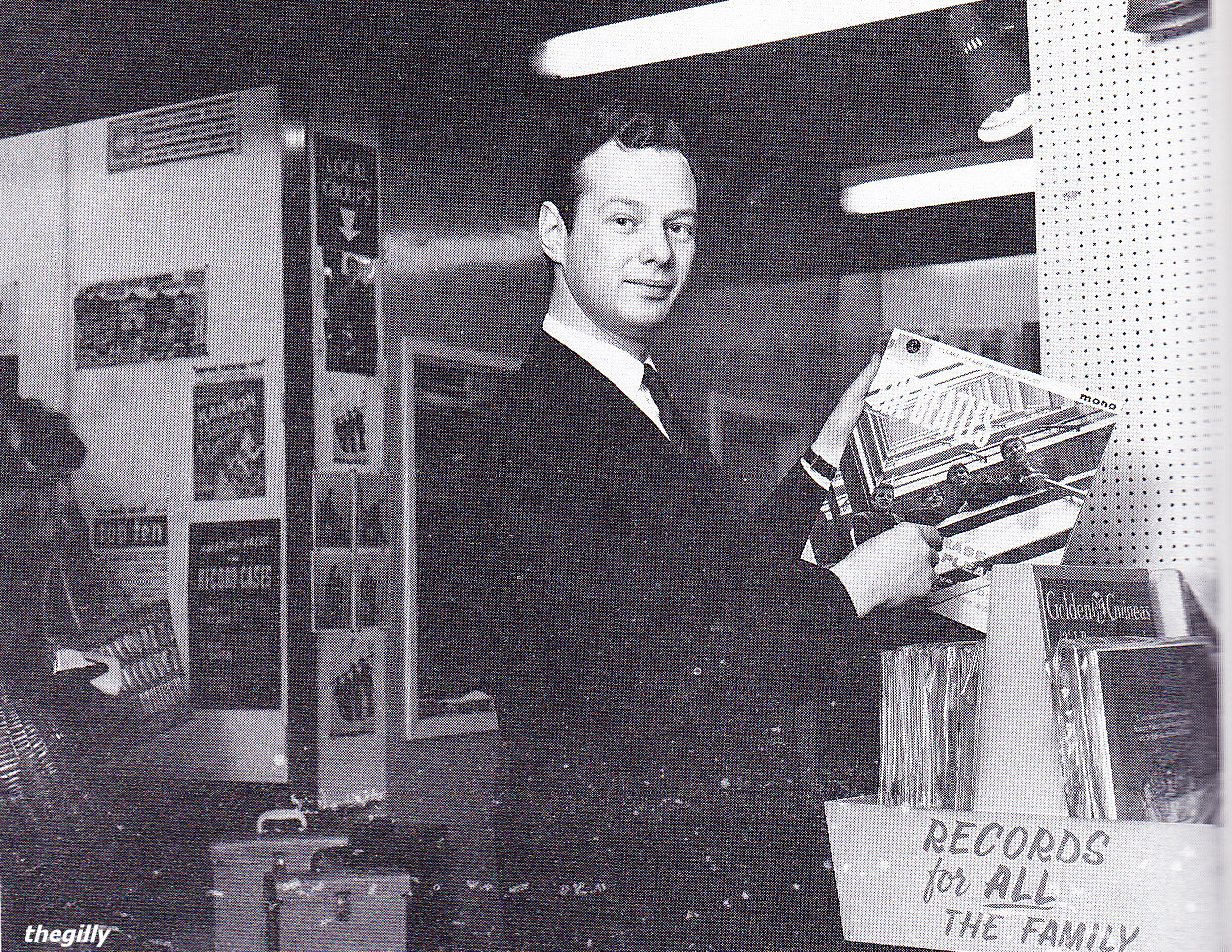
In 1957 a twenty-one-year-old Liverpool man, Alan Sytner, who had been running a weekly jazz club at several other Liverpool locations, decided he would like to open his own club. He had been impressed by a club he had visited on the Left Bank in Paris called Le Caveau, which was housed in an underground cellar with brick arches.
On his return to Liverpool he sought out similar premises in the city centre and found what he was looking for in Mathew Street, a narrow street with warehouses on one side and the Fruit Exchange on the other. It had previously been used for storage and even as an air raid shelter in Word War II.
The Beatles at the Cavern
1,500 Left Outside!
The cellar was painted, lighting was installed and a stage was built at the far end of the middle one of three tunnels. On Wednesday January 16th 1957 the Cavern Club opened for its first gig, with 600 people crammed inside – and 1,500 left outside. The headline act, the Merseysippi Jazzmen, are still performing today.
Alan Sytner ran the Cavern strictly as a jazz club but starting in 1957 he allowed skiffle groups to play, getting very annoyed if any of them tried to play rock ‘n’ roll. The Quarrymen skiffle group, precursor to the Beatles, first played the Cavern on a date no-one can pinpoint in mid-1957 and again on 7th August 1957, only weeks after John met Paul at the St. Peter’s Church Garden Fete in Woolton Village.
Get your copy of Debbie’s fascinating book on the story of The Cavern Club
Cavern Club – The Inside Story
This first-hand account of Debbie’s teen years frequenting and eventually helping to run the original Cavern Club is the authentic inside story of the Beatles launch pad, full of triumphs and failures – and surprise celebrity encounters.
£17.25Original price was: £17.25.£13.50Current price is: £13.50.
As you are bound for your friend’s house on your bicycle to listen to the latest Beatles record, you gaze at the flags attached to your handlebars, watching the Fab Four wave and flap in the breeze as you zoom down the road. What a beautiful Beatle-filled moment you’ll never forget!
Those items flapping in the wind were a set of five, 6″x4″ white plastic flags that attached to bicycle handlebars. One flag had “The Beatles” printed on it in dark blue ink, and the other four were individual drawings of each Beatle playing an instrument, with first-name facsimile signatures also displayed.
Beatles Bicycle Flags
The Beatles 5 Flag Bicycle Set
The flags were sold in a plastic bag that also contained five, 10½” black, golden-topped wooden sticks to steady the flags and a metal holder attachment connecting the items to your handlebars. Printed on the package in red ink was “Official The Beatles 5 Flag Bicycle Set”, and not-the-best graphic images of the band (in blue ink), stars and music notes, a young lad with all of the flags attached to his bike, and instructions to assemble the item:
“ASSEMBLY INSTRUCTIONS for bicycle and scooters. Remove center bolt of handlebar. Insert holder and replace bolt. Bend stem to desired angle.”
The handlebar attachment was metal and had a manufacturing notation: “Metal Brand PAT PENDING.”
Beatles Pennants
Shipped to retail stores in a plain brown envelope titled “12-B-2 BEATLE BICYCLE FLAG SET,” it’s interesting to note that the images on the flags were the same ones that the company used on one of their Beatles pennants.
The flags were made by American Flag & Banner, the same company that made the licensed US pennants. The American Flag & Banner Company was named in a NEMS Enterprises, Ltd vs. Seltaeb, Incorporated lawsuit filed in the Appellate Division of the Supreme Court of the State of New York, First Judicial Department, dated: New York, New York, July 6, 1965.
Collection of Beatles Flags
Lawsuit
On a side note, American Flag and Banner was involved in a lawsuit by the government dated May 28, 1965, GSBCA No. 1391. Contract number GS-00S-45768. They were said to be delinquent ‘to fulfil the government’s needs for flags’ they agreed (on Feb. 19, 1963) to produce.
NEMS and the Business of Selling Beatles Merchandise in the U.S. 1964-1966 (2ND EDITION)
The book covers the approximately 150 licensed items that dotted store shelves and helped fuel the band-crazed fan during the time right after the band landed in America and performed on The Ed Sullivan Show. Toys, games, dolls, jewelry, clothing, wigs, and more!
Strawberry Fields Forever by The Beatles on Magical Mystery Tour
“Strawberry Fields Forever” from Magical Mystery Tour
Equal time here for a critically acclaimed Beatles song, one that some critics have described as a masterpiece. “Strawberry Fields Forever,” written by John Lennon, was on the other side of the double-A-sided 45 with Paul McCartney’s “Penny Lane” when it was initially released in 1967, and then included on the Magical Mystery Tour album. It was based on Lennon’s recollections of playing as a child on the grounds of Strawberry Fields, the Salvation Army home for children in Liverpool.
Lennon crafted the song during the six weeks that he was on the set for a small part in Richard Lester’s film How I Won the War. With the help of LSD to give the song its psychedelic tone, Lennon referred to “Strawberry Fields” as psychoanalysis set to music, a look inside the real him, including some of his significant insecurities. For example, in David Sheff’s Lennon biography All We are Saying Lennon reflected:
John Lennon on Strawberry Fields Forever
“No one I think is in my tree.” Well, what I was trying to say in that line is “Nobody seems to be as hip as me, therefore I must be crazy or a genius.” It’s the same problem as I had when I was five: There is something wrong with me because I seem to see things other people don’t see. Am I crazy, or am I a genius?… What I’m saying, in my insecure way, is “Nobody seems to understand where I’m coming from. I seem to see things in a different way from most people.”
In the studio, some elaborate instrumentation accompanied Lennon’s introspection: all four of the Beatles played additional percussion instruments in addition to their guitars and drums, as did some Beatles assistants. Four trumpet players and three cellists contributed as well. And John Lennon and Paul McCartney each played a mellotron, a keyboard instrument that played tape loops and could mimic musical instruments. For this song, the mellotron’s flute sounds were accessed.
Knowing Where We Came From
“Strawberry Fields” began and ended with the mellotron and was dreamy/avant-garde/psychedelic in tone, with a false ending followed seconds later by cacophonous swirly-sounding mellotron, trumpet, and snare. John said this was one of the favorite songs that he wrote.
Knowing where we came from – and where we’re going, together – is worthwhile. Be smart, be safe, be well.
After their first meeting with Brian Epstein, John Lennon, Paul McCartney, George Harrison and Pete Best had a follow up meeting at Brian’s NEMS office in Whitechapel, Liverpool. Tony Broadbent takes up the story from his book, The One After 9:09:
“I tell you, the door’s bloody well locked.”
“That’s because it’s half-day closing, dafty.”
“Well knock on it, then.”
“You knock, you’re nearest.”
“Pete, you do it.”
“Me hands are full.”
“Well, use yer head, then.”
“We could always use Bob as a battering ram, if we had to.”
“We already are,” growled John Lennon.
This Is Me Dad
He opened the door and smiled a greeting as all four Beatles tried to push through as one. “This is me Dad,” John said, pointing over his shoulder to the small dapper figure of Bob Wooler. The absurdity of it perplexed him for a moment. He’d fully expected the Beatles to come by themselves, his simple hope they’d all arrive together and on time. Now here they were with a stranger of sorts in tow and everyone smelling very strongly of beer. It was all suddenly so very awkward. The Cavern’s disc jockey smiled at him, apologetically.
He knew very well who Bob Wooler was. And in many ways had every reason to be grateful to the man, as the DJ had been largely responsible for creating local demand for The Beatles’ recording of ‘My Bonnie’. So once he’d managed to get everybody sat down in his office, upstairs, he took Bob Wooler as his cue.
Bob Wooler
“Thanks to Mr Wooler’s constant featuring of ‘My Bonnie’ in clubs and dancehalls around Liverpool, NEMS has sold over a hundred copies of your Polydor recording in the last week and a half, alone. Further, to which, I’ve already met with the London representatives of Deutsche Grammophon, the owners of the Polydor label, to ask them to release your record in the United Kingdom.”
It was a good opening verse, but The Beatles were impatient to get to the chorus. That’s why they’d brought Bob Wooler along. They liked and respected the DJ, because they knew he liked them and championed their music. He was also an adult, like Brian Epstein, and they wanted his opinion, because as eager as they were for business guidance, they were still very cagey about it all. When they’d all met up in the Grapes, prior to their appointment at NEMS, John Lennon had been his usual blunt self.
All Mouth and No Trousers?
“This Epstein fella has no experience with rock ‘n’ roll other than selling pop records from his shops. From the look of him, he’s probably more into Mantovani and his bloody Orchestra or, worse, bloody opera. So, the question is, Bob, as much as we need help, like, is this Epstein ever going to amount to anything? Or do you reckon he’s all mouth and no trousers?”
As ever, Bob Wooler played it cautious and said he’d best hold his counsel until later. It was always the wiser course to rehearse your ad-libs before you ever gave voice to them, off the cuff, so to speak.
BRIAN EPSTEIN looked at each Beatle, in turn. “You don’t currently have a manager, do you?” They slowly shook their heads. “So, I take it then,” he added, cautiously, “that there’s no one that negotiates your fees or that deals with your engagements on a regular basis?”
We Don’t Have A Proper Manager
They shook their heads. After a lengthy silence, Bob Wooler made as if to speak, but it was Paul McCartney that spoke up. “As I said, last time, Brian, Pete sorts out our diary of engagements, usually. Helped of course by his mum, Mona. She owns the Casbah Club, like. But other than that, no, we don’t have a proper manager. So we generally take whatever we can get.”
“Yes, I see,” said Brian Epstein.
“We take anything and everything we can get our bloody hands on, okay?” snapped John. “But we get lots of bloody work and we don’t have to go bloody begging for it, either, if that’s what you think.”
“No, no, John, I’m not inferring anything. It’s only that whatever you’re getting from people, I think you’re worth much, much more. And I think that all the promoters around Liverpool know that. That’s why you’re always in work, but really going nowhere at all.”
A Dead End?
The silence this time was like a blanket of fog. The truth of Brian Epstein’s words hit hard, even though The Beatles had talked of little else for weeks. They were working harder and harder and becoming more and more popular every time they played, but were really just going round and round the same old circles. John, Paul, and George all shared a growing dread that, as big as The Beatles were around Merseyside, there was a very real danger that a proper recording contract, let alone greater fame and fortune, might elude them forever. Liverpool had very quickly and surprisingly turned into a dead end. And for once, drained of all their colourful banter, The Beatles stared back at the man who’d suddenly shone a bright light onto their deepest and darkest fear.
Brian Epstein smiled, almost bashfully. “As I told you, last Sunday, I don’t have much experience in these sort of things, but I’d very much like to look after your affairs.” He swallowed. “To put it simply, you do need a manager. The question is would you like me to do it?”
The Beatles Sat Still
The Beatles sat as still as statues and just stared at him. He resisted the temptation to shoot his cuffs and instead re-read the points he’d written down on his notepad. He looked up. “If you did want me to manage you, I’d require fifteen per cent of your gross fees, on a weekly basis. In return, I would assume responsibility for arranging all of your bookings, which, let me stress, would be much better organised, far more prestigious, and would take you much further afield than all the venues you play here in Liverpool.
I would also make it a point that you would never again play a date for less than £15, except for your Cavern lunchtime sessions, where I will renegotiate your current fee of £5, so that it’s doubled to £10. With the number of people you attract to the club regularly, Ray McFall can more than afford it. Further, I will do my best to extricate you from the recording contract you signed with Mr Bert Kaempfert, in Hamburg. After which, I’ll use my influence as one of the largest record retailers in the north-west to get you a proper recording contract with a major British recording company.”
Would You Like Me To Manage You?
He looked down, aligned his notepad with the edge of the leather-bound blotting pad and carefully and deliberately placed his hands flat on the desk. Summoning up all his theatrical training, he composed his face into one of quiet confidence. “So, would you like me to manage you?” He looked at each Beatle, in turn, again, purposefully ignoring the ripples and currents in the silence.
John’s eyes slid sideways and he wrinkled his nose. Paul and George both coughed so as to conceal the slight nod of their heads. Only Pete Best held Brian Epstein’s gaze without regard to how his band-mates felt. This would dramatically change his role in the group and he wondered what his mother would think about it. After all, as she’d so often told him, it was really his group, wasn’t it? Pete Best and The Beatles. He was the one the girls always screamed and shouted for. Everyone said so.
Bob Wooler did his best to fade further into the background. After all, he’d often been one of those greedy Liverpool promoters Brian Epstein had just spoken about. It was time to keep a very still tongue.
You Manage Us!
John’s voice suddenly boomed out like a foghorn. “Right, then, Brian, you manage us. Where’s the contract? On yer desk, is it? Give it us, here, then, and I’ll sign it now.”
“I don’t have a contract for you to sign, John, because I didn’t want you to think I was being presumptuous. However, I promise, I’ll have one drawn up by the next time we meet.”
“Will it make a difference to what we play, Brian?” Paul asked.
“No, Paul, not at all. I just want to help present you in the very best light possible, ensure you’re always paid what you’re worth, and given the proper respect that is your due.”
This was the sort of stuff they wanted to hear. The Beatles nodded. At least three of them did. And so did Bob Wooler.
Bob Wooler was deep in thought. Even he’d underestimated the manager of NEMS. Brian Epstein’s timing had been impeccable. If he’d had the courage or the vision or the money, he might’ve had a go at managing The Beatles himself. As it was, he had enough on his plate tending to his turntable, his ever-expanding record collection, and arranging for groups to play at the Cavern and elsewhere. One thing he knew for sure, though, this latest development would put a good few Liverpool noses out of joint.
George Harrison scratched his nose, absentmindedly. “I think I better go now, go relax in a bubble bath. I need to ponder what the word ‘presumptuous’ means when it’s at home.”
Discover more about this important time in Beatles history in Tony’s great book, The One After 9:09
The One After 9:09
A DISAFFECTED LIVERPOOL TEENAGER BECOMES INVOLVED WITH THE BEATLES WHEN HE’S HIRED TO HELP PREVENT THE MURDER OF THE GROUP’S MANAGER, BRIAN EPSTEIN.
With all of the publicity surrounding the “new” Beatles Get Back film directed by Peter Jackson, I have had countless conversations about the new film. The anticipation is at almost fever pitch as the trailers we have seen look incredible.
It made me decide to back and watch the original “Let It Be” film that was directed by Michael Lindsay-Hogg. It has been years since I last watched it and through all the discussions over those years, one theme seems to permeate through everything: we were watching The Beatles fall apart. But were we?
Paul and George Argue
The most famous element was always the argument between Paul and George, where George tells Paul that he will play whatever Paul wants him to, or he just wouldn’t play. Fans also refer to Yoko being permanently at John’s side, which she was.
But was it a negative film? Is it too painful to watch?
I have to admit that I thoroughly enjoyed watching it again, and it was filled with lots of fun scenes where you could see all four of them enjoying what they were doing, especially when they break out into funny arrangements, or the silly voices come out, like in “Besame Mucho”. But, it wasn’t the dark, depressing film that I seemed to think it was.
The Beatles Rooftop Concert
Then of course, we end with that incredible rooftop concert. How Lindsay-Hogg and his team were able to capture that is incredible, with the limited technology and space available. Plus, when you see them performing, I think they were recapturing memories of playing to crowds, which they hadn’t done since August 1966. The Beatles were enjoying themselves and it still such an iconic film.
Apology Needed?
We know Peter Jackson’s 6 hour special series is going to be superb, and it will have been worth the wait. However, I believe we also owe an apology and debt of thanks to Michael Lindsay-Hogg who has probably had a lot of negativity surrounding the film he made. He did a great job with what he had to work with.
Let It Be or Get Back?
Yes.
Enjoy the original, but I can’t wait for the new one too.
As we come to remember George Harrison 20 years after he died, Peter Eijgenhuijsen looks at the cover to With The Beatles.
A friend of mine, a hard-core Beatles fan, came up with the idea of The Beatles Era when George died in 2001, this month twenty years ago. My friend was on a business trip to the United States, when he saw, in one of the offices he visited, a newspaper clipping on the wall. It showed just a picture of the cover of their second album With the Beatles with the left side made black. Only Paul and Ringo were looking at him, with serious faces, as if they were aware of their inevitable erasure.
It was then, that he realized that we were entering a new phase, that nothing would be the same ever again. It was then that he got the inspiration for his theory that we all live in The Beatles Era. An Era that can be divided in five periods: Before the Beatles, The Beatles Years, The Solo Years, The Reduced Solo Years, the period we currently live in, and the last and fifth period After the Beatles.
Everything Has a Meaning
One day, when I visited him, he showed me the impact of that moment with the album cover of With the Beatles. It was scary. The black and white picture, with from left to right John, George, Paul, and Ringo. When I covered the left side to get the effect of the newspaper picture, I understood that the effect must have been very powerful. “Of course,” my friend said, “we do not know how the period The Reduced Solo Years will end, but the order of the individual Beatles on the album cover does not look insignificant to me.” “Everything on the cover of Beatles albums, has a meaning,” I said. “Intentionally or unintentionally.”