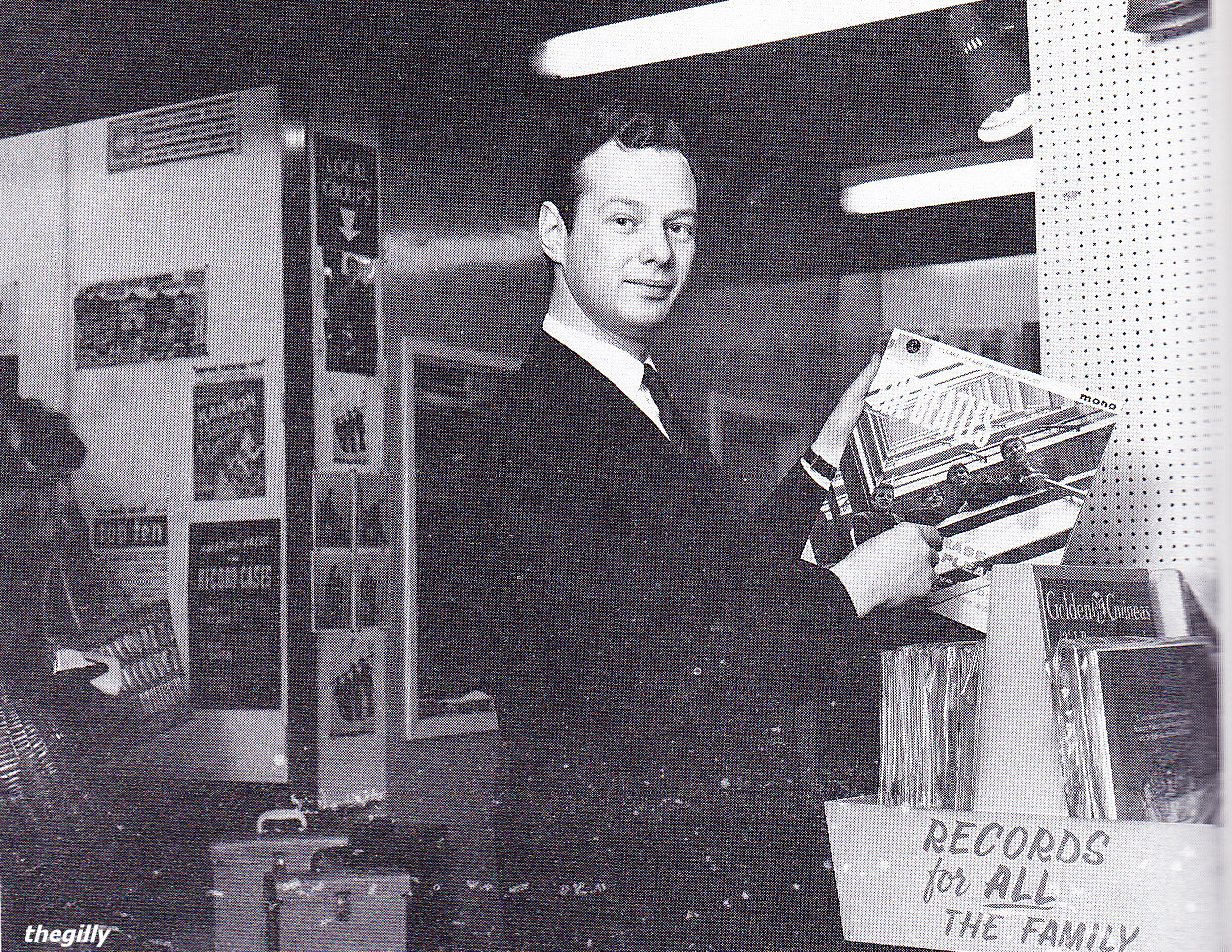
The Beatles played in Aldershot on 9th December 1961. Tony Broadbent takes a look at the momentous day that would end Sam Leach’s hopes of becoming Beatles manager, and convince John, Paul, George and Pete that Brian Epstein was the right man for the job.
THE PALAIS BALLROOM, ALDERSHOT
SAM LEACH thought quick and hard. When in doubt do something, anything. “I tell you what lads, never say die, we’ll drive round the town, pin up posters on every hoarding or telegraph pole we see. That done, we’ll drop off your instruments and equipment at the Palais Ballroom, then I’ll take everyone for a quick bite to eat at the little cafe opposite. How’s that sound?”
For once, The Beatles were stone cold silent.
After grabbing something to eat, they all split up and scoured the town for prospective punters. Handing out handbills to everyone they met. They visited every pub and coffee bar and dropped word about the fabulous group playing that night, at the Palais. But the good people of Aldershot weren’t interested, even when, in utter desperation, Sam played his final card and told any and every one that’d listen that admission was free.
“Aldershot’s not ready for rock ‘n’ roll or The Beatles,” Sam said, dejectedly, lighting up another cigarette.
“Aldershot’s so crap, they’re not even ready for inside bloody toilets,” snapped John. “But as we’re already bloody here, let’s all just sod off down to Soho, in London, and get ourselves royally pissed.”
“Hey, come on, John,” pleaded Paul. “We’ve got to give it a try, even if we only play for five minutes. Eh, oop, kid, what do you say?”
“No, they can all go and get buggered…the dozy sods.”
Paul McCartney Started to Sing
Paul put his head on one side and started to sing ‘There’s no business like show business’. He smiled inanely and waved his hands in the air as if they were tambourines. “Hey, come on, John.” He kicked a foot out like a Kentucky minstrel and started prancing up the street. “Hey, Johnny, you know the show’s always gotta go on.”
“Ah, sod it,” snapped John. “Where the fook are we going to, fellas?”
“To the top, Johnny,” they all chorused back.
“And which fookin’ top is that, fellas?”
“To the top of the fookin’ poppermost, Johnny,” they all yelled.
“Okay, fellow Beatles, we fookin’ well play. The show goes on.”
Everyone cheered then, even Dave, Sam’s driver.
Sam Opened The Doors and……..
Sam opened the doors of the Palais Ballroom at half-past seven on the dot, as advertised, but the only thing he was met with was a face-full of swirling snowflakes. He closed the door quickly. “God’s holy trousers, whatever did I do in my past life to deserve this?” He shook his head. “No business, like no business? Sod that, let’s have a ball, anyway.” He sauntered into the ballroom. “They’ll all be along in a minute, lads, so why don’t you get started. Just think of it being like your early days in Hamburg. You know, those times you told me about, when it was the sound of your music alone that had to grab the punters by the scruff of the neck and drag ‘em in, off the street. What was it called, now? The Punjabi?”
“No!” The Beatles all shouted back. “The fookin’ Indra.”
“That’s what I meant,” said Sam. “Do some fookin’ Indra. If anything will bring the buggers in, it’ll be a bit of that.”
“Yeah,” sniffed George. “Mach some more bloody schau.”
“Mach schau! Mach schau!” yelled John into the microphone.
Pete, Count us in!
“Okay,” shouted Paul, vamping a run of notes on his bass. “Pete, count us in.” Pete hit his sticks together. Tik-a-Tik-a-Tik-a-Tik-a. Paul hit a single bass note and launched straight into ‘Long Tall Sally’. That done, fully energised by the music, The Beatles shot themselves full of rhythm-and-blues and ripped it up and rocked it up for three finger-blistering, pick-scraping hours. They pounded out the beat as if they were playing ‘the Tower’ in front of four thousand screaming fans, not the eighteen or so people dancing and jiving at the Palais Ballroom. And Sam, Terry, Spike, and the van driver, Dave, could do nothing but lose themselves in the magic of it all. Swinging and swaying, clapping their hands, popping their fingers, and tapping their feet to the relentless rockin’ Mersey beat.
Money
And then with John’s final scream that all he ever wanted from life was ‘Money’, The Beatles rolled up the night with one last long chiming chord. Everyone clapped and cheered, jumped up and down, and shouted for more. And all four Beatles up on the stage, their hearts thumping in their chests, sweat pouring from them, looked out from under the spell they’d just cast and saw that as tiny as the crowd was, the cry for more was as urgent and as heartfelt as any audience they’d ever played to.
John sighed and nodded at Paul. Paul nodded at George. Paul, his voice hoarse, whispered, “Roll Over Beethoven.” John, George and Pete each nodded back. George picked out the opening notes of the Chuck Berry rocker, each note as sharp and bright as the glass in the mirror ball hanging from the ceiling. The girls spun. The boys jived. And The Beatles rocked it, two by two, for ten glorious minutes and everyone dug to the rhythm-and-blues until ‘Liverpool’s Number One Rock Outfit’ brought their first rocking visit to the south to a close.
Roll over Aldershot and go tell London the news.
Sam stood at the foot of the stage, beaming. “That, fellas, was bloody marvellous. You did yourselves and all of Liverpool proud. So, what say, we celebrate? I’ve asked the local judies if they’d like to stay on for a bit and, believe it or not, they all said yes. I wonder why? So I had our Spike go and get in two crates of Watneys Brown Ale and a box of Smith’s crisps from the pub over the road. So, if you’re up for it, like, I’ll go crank up the record player, put on a swinging platter or two, and we can all have ourselves a proper party.”
John didn’t bother looking at Paul or George. He already had his eye fixed on something blonde standing in the middle of the dance floor. “Oooh, yes, please, Mr Sam, I could do with a bit o’ hanky-panky about now. I need to exercise me evil ways.”
Dancing with The Girls
They all took turns dancing with the girls, everyone doing their version of The Twist. John, impatient for his next turn at dancing waltzed with George, then Paul. Pete sat that one out. They played ‘Bingo’ using beer bottle-tops as counters. Played football with Ping-Pong balls. The rest of the time they just played the fool. John, his back hunched, his face distorted, staggering around the ballroom yelling, “The bells. The bells. It’s the bells.”
Sam handed Spike a camera. “Here, Spike, take some more photographs. I want to remember this. They’re certifiable, the lot of them.”
“Yeah,” said Spike, “certifiably brilliant.”
There was a sudden loud hammering on the front door.
“Come on in, if you’re coming,” shouted Paul.
“Bugger off!” yelled John.
Police!
Terry went to investigate and quickly reappeared, his arms waving from side to side, in a frenzied hand-jive. He snatched the needle arm from off the turntable, spun round, and mouthed the word, “Police.”
The effect was instantaneous. John began giggling and was soon doubled up with laughter. Paul sniggered. George grinned. Pete bit his lip. Sam, madly signalling for quiet, bounced his hands up and down in front of him as if trying to push the sound to the floor, but it did no good, the giggling and laughter just grew louder, as did the knocking.
Sam sighed, burped, belched; went to deal with ‘the bizzies’.
“What the bloody hell do you think you’re doing?” yelled an authoritative voice. “Do you know what bloody time, it is?”
Sam peered out into the gloom. In the pale yellow light of the street lamps were four police vans, two police motorbikes, a mounted policeman, and a very big, sour-faced police sergeant.
“Er, um, we were just finishing, like, constable.”
“And about bloody time, too. It’s gone bloody midnight. And you lot are creating a very serious disturbance of the peace.”
Sam blinked and blinked and tried desperately to sober up. “Er, we, er, were just going, officer.”
Get Out of Aldershot!
“Now, wouldn’t be soon enough,” barked the police sergeant. “You bloody shower have got fifteen minutes to get out of Aldershot, do you hear me? On yer bikes, the lot of you, and don’t you ever come back.”
“You and Aldershot can fook off, too,” George muttered under his breath. “Never would be far too soon for us ever to come back here.”
Get Tony’s great book, The One After 9:09 now

The One After 9:09
A DISAFFECTED LIVERPOOL TEENAGER BECOMES INVOLVED WITH THE BEATLES WHEN HE’S HIRED TO HELP PREVENT THE MURDER OF THE GROUP’S MANAGER, BRIAN EPSTEIN.
PURCHASE ON AMAZON
Kindle from $2.99 and Paperback from $6.99