As we come to remember George Harrison 20 years after he died, Peter Eijgenhuijsen looks at the cover to With The Beatles.
A friend of mine, a hard-core Beatles fan, came up with the idea of The Beatles Era when George died in 2001, this month twenty years ago. My friend was on a business trip to the United States, when he saw, in one of the offices he visited, a newspaper clipping on the wall. It showed just a picture of the cover of their second album With the Beatles with the left side made black. Only Paul and Ringo were looking at him, with serious faces, as if they were aware of their inevitable erasure.
It was then, that he realized that we were entering a new phase, that nothing would be the same ever again. It was then that he got the inspiration for his theory that we all live in The Beatles Era. An Era that can be divided in five periods: Before the Beatles, The Beatles Years, The Solo Years, The Reduced Solo Years, the period we currently live in, and the last and fifth period After the Beatles.
Everything Has a Meaning
One day, when I visited him, he showed me the impact of that moment with the album cover of With the Beatles. It was scary. The black and white picture, with from left to right John, George, Paul, and Ringo. When I covered the left side to get the effect of the newspaper picture, I understood that the effect must have been very powerful. “Of course,” my friend said, “we do not know how the period The Reduced Solo Years will end, but the order of the individual Beatles on the album cover does not look insignificant to me.” “Everything on the cover of Beatles albums, has a meaning,” I said. “Intentionally or unintentionally.”
The Beatles appeared at Operation Big Beat, the most impressive line up of Merseybeat bands ever! Tony Broadbent adds the drama to this incredible event.
The dense blanket of fog had come up river late that afternoon. No one had expected it. Not even the weatherman on the telly the night before. First report of it was on the midday shipping forecast on the radio. And by mid-afternoon tongues of fog had already moved across Liverpool Bay and were licking hungrily at Wallasey, Bootle, and Crosby. By teatime, both banks of the river and ‘the Tower’, at New Brighton, were shrouded in a grey-green fog the colour of the Mersey.
All of Liverpool was completely fogbound.
“What the bloody hell did I do in my past life to deserve this?”
“Don’t know, Sam, but it must’ve been something pretty bad.”
“Bloody hell, Terry, will you look at that bloody fog.”
“Well, I would, like, if I could see anything.”
“Alright, smart arse, back inside the Grapes. This calls for some serious drinking. I’m ruined I am, bloody ruined. What time is it?”
The Beatles will Get Through
Sam Leach (right) with Paul McCartney and Pete Best
Spike glanced at his watch. “Five past, Sam. But no need to worry, I’m sure The Beatles will get through.”
“I don’t doubt it, Spike, especially with that mad sod, Nelly, driving. No, it’s the fans I’m worrying about. What with all the ferries being stopped and most of the busses not running, how in hell they’re going to get themselves there, I don’t know. You couldn’t find the bloody Tower in this fog, even if it fell on top of you. We’ll be bloody lucky if we can find it ourselves. The real sod of it is, though, ticket sales have been much less than I’d hoped. You’d think the kids had given up on rock ‘n’ roll.”
“Maybe for one night, Sam. But not in our lifetimes, they won’t.”
“Thank you, Sigmund Freud. What time is it?”
“Quarter past. What time did Neil say he’d have them here?”
“Half-past. But in this pea-souper, who the heck knows?”
Terry McCann arrived with a tray of drinks. “Look on the bright side, Sam. Just imagine The Beatles and Gerry and Rory all playing their hearts out at ‘the Tower’ just for us. Cheers.”
“I tell you, I’m ruined I am, totally bloody ruined. Cheers. Talking of which, what time is it?”
“Nigh on half past, Sam. Stop yer worrying.”
“That’s all very well for you to say, sunshine, but…”
Neil Aspinall’s Battered Bedford Van
A car-horn beeped a tattoo outside in the street and eyebrows shot up in question and hope. Spike was already at the pub door. “It’s them. All aboard the New Brighton ferry!” They downed their drinks in a rush, piled out of the Grapes, and into the back of Neil Aspinall’s battered Bedford van.
“ ‘Lo Sam. ‘Lo fellas,” chorused Neil and The Beatles.
“Get yer arses in quick or we’ll all catch our deaths,” shouted John Lennon.
“All arses aboard and accounted for, sir,” yelled Sam. “Hey, thanks for turning up, lads. At least tonight won’t be a complete bloody loss.”
“Well, wherever it is we’re going,” groaned Neil, “I’ll see if I can get us there by the middle of next week. Everyone hold on tight.”
“Next stop, the Mersey Tunnel,” shouted George.
We’ll Play For Nothing
After a few minutes of hurtling through the streets of Liverpool at five miles per hour, Paul McCartney turned to Sam and said, quietly, “Look, Sam, we were talking, like, on the way to pick you up. If this bad weather hits you hard tonight, we’ll play for nothing, okay?” Sam turned to John and George who both nodded their agreement. Pete, sitting up front, holding his snare drum on his lap, gave a thumbs-up. Sam coughed and nodded his thanks, his eyes a little glassy. Terry and Spike huddled by the back doors kept their thoughts to themselves.
When the old Bedford van at last entered the approach to the Mersey Tunnel, George yelled out again. “There it is, fellas. You can just make out the Hessy’s sign on the side of the building.”
“Oooh, Hessy’s,” yodelled John and Paul in Goon-like voices.
“Ra-di-o!” The Beatles all yelled as Neil tapped out the beat on the car-horn. Then they all clapped and cheered.
“We do that every time we pass that sign,” explained Paul.
“It’s our way of wishing for the day we hear one of our own songs actually played on the radio,” added George.
Where Are We Going Fellas?
“Where we going to, fellas?” John shouted.
“To the top Johnny,” the other three Beatles chorused.
“And which top, is that, fellas?”
“To the topper-most of the popper-most,” they yelled in unison as the van rattled on through the Mersey Tunnel.
“We best start by topping the bill at ‘the Tower’, then,” John shouted back. “How much bloody higher can you get than that?”
“You guys could make it all the way to the moon, if you wanted to,” Sam said, the lump still in his throat. “Thanks, lads. I won’t forget this. Not ever.”
“Hey, shurrup will you, Sam. And start soddin’ praying, instead. We’ve got to get to the bloody place in one piece, yet.”
“Righto,” yelled Sam. “Our Lennon, who art in heaven…”
Debbie Greenberg never missed a Beatles gig at The Cavern and she has some amazing memories. One of the most important Cavern appearances was when Brian Epstein came to see The Beatles for the first time.
“The Beatles had played a few numbers with Tony Sheridan in Hamburg, including “Ain’t She Sweet”, but the one that sticks in my memory is “My Bonnie”. When The Beatles played these songs at the Cavern they were absolutely brilliant. I think Tony had a big influence on how The Beatles dressed and moved. John Lennon copied Tony’s posture, holding his guitar high up on his chest.
“Tony was very talented but by all accounts a force to be reckoned with. His mood could change in an instant. It must have been difficult to work with somebody so unpredictable. They had first met when both were playing for a season at the Top Ten Club in Hamburg. German band leader Bert Kaempfert had spotted them and arranged for them to cut a disc of “My Bonnie” together, which was released in Germany.
Raymond Jones
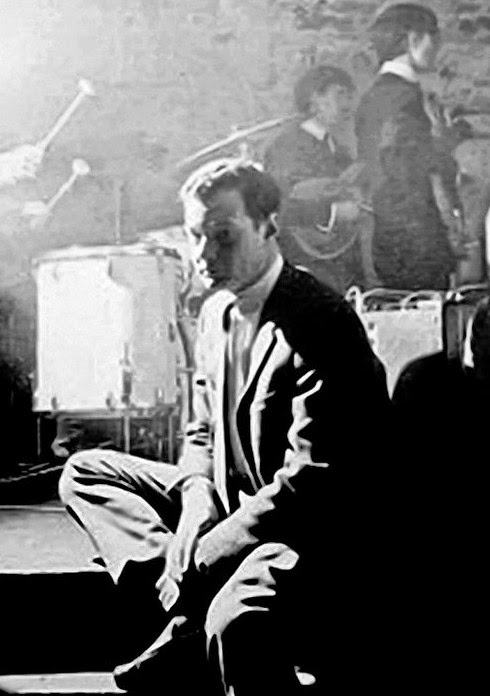
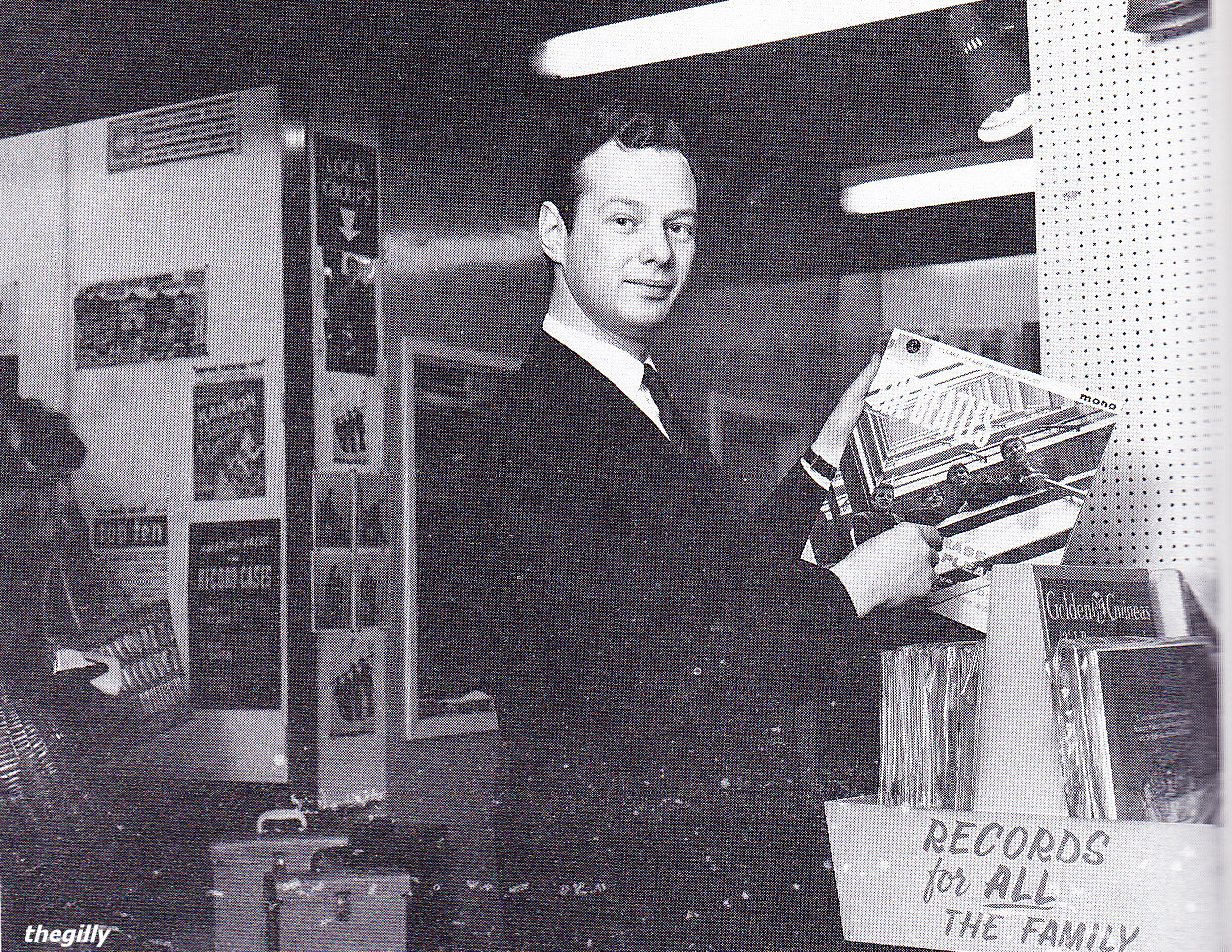
“News of this record filtered back to Liverpool and one fateful day, Saturday 28th October 1961, a Liverpool teenager called Raymond Jones went into NEMS record store to ask about the disc. Situated on Whitechapel, NEMS was just a stone’s throw from Mathew Street and the Cavern. The young store manager was Brian Epstein, who prided himself on being able to source any record that had been officially released. After hearing the track with its throbbing beat he was intrigued.
Brian asked his assistant, Alistair Taylor, to arrange a visit to the nearby Cavern to see The Beatles at one of the lunchtime sessions. He got there on 9th November 1961 with Alistair and saw The Beatles play for the first time.
Epstein was entranced by their performance – and by the Cavern, the place he later called a “cellar full of noise.”
A Handshake
However, Brian Epstein was not the first candidate for the position of Beatles manager. A Liverpool-based promoter called Sam Leach, who regularly organised dances and live shows in local venues, frequently hired the Beatles. As he was giving them regular work and they were all very good friends, he suggested he should become their manager.
The group agreed and on the strength of a handshake with John Lennon, the group’s leader, he thought he’d secured the position as their first manager.”
As we know, after seeing The Beatles, it was Brian Epstein who would become the group’s manager and take them to the toppermost of the poppermost.
Get Debbie’s book on the story of the Cavern Club.
Cavern Club – The Inside Story
This first-hand account of Debbie’s teen years frequenting and eventually helping to run the original Cavern Club is the authentic inside story of the Beatles launch pad, full of triumphs and failures – and surprise celebrity encounters.
£17.25Original price was: £17.25.£13.50Current price is: £13.50.
In the latest in his series on Beatles merchandise, Terry Crain takes a look at the Beatles Skateboard.
Whoa, dude! If you needed to catch some rays and hang ten with the lads, a Beatle skateboard was your item of choice. Surf Skater Company, Incorporated., 39th and Killam Avenue, in Norfolk, Virginia, manufactured a skateboard – the employees probably tested the boards in the street while on break!
Isaac Glazer founded the Surf Skater Company. Glazer was a member of the Army’s first Special Service Forces and a decorated World War II veteran, participating in the D-Day invasion. He became a Doctor of Optometry and later, founder and president of Surf Skater. Glazer died in 2007.
Dezo Hoffman Beatles Photo
The skateboard, available in three sizes and various colors, was basically a wooden board with metal wheels. The large, bold type, “The Beatles Skateboard,” was featured on the board next to the Dezo Hoffman group photo. The skateboard container had a graphic drawing of the group with embellished colorful stripes. Collector Dennis Dailey whimsically noted, “It actually looks like they spent more time and energy into designing the box than the skateboard.”
Playthings Magazine
Article Promoting The Beatles Skateboard
A press release was published in Playthings magazine, December 1964 issue, on page 73, stated:
“Beatles Skate Board in 3 Models Now Available from Norfolk Firm
Available for immediate delivery are three models of The Beatles Skateboard, a new addition to the line of Surf Skater Company, Inc., 39th and Killam Avenue, Norfolk, Va. The Beatles have given the company the exclusive rights for the manufacture of the items. Model #210-B measures 18½” by 5¾by ¾”, #2100 B is 27″ by 6½” by 1-1/16″, and #2200-B has dimensions of 32″ by 6½” by 1-1/16″. Made of quality wood and painted in attractive colors, each features a steel wheel assembly attached with rust-preventive cadmium-plated nuts and bolts. Rubber-cushioned for faster steering and greater turning action, this assembly consists of a rigid flat steel plate attached to Union Hardware wheels with bright dust covers. Decorating the board are its name and a picture of the Beatles, which can be easily peeled off and kept as a souvenir. The skateboards are packaged in two-color cartons.”
Seltaeb
Surf Skater Co. Inc. was named in a NEMS Enterprises, Ltd vs. Seltaeb, Incorporated lawsuit filed in the Appellate Division of the Supreme Court of the State of New York, First Judicial Department, dated: New York, New York, July 6, 1965.
Get your copy of Terry’s excellent book on The Beatles Merchandise
NEMS and the Business of Selling Beatles Merchandise in the U.S. 1964-1966 (2ND EDITION)
The book covers the approximately 150 licensed items that dotted store shelves and helped fuel the band-crazed fan during the time right after the band landed in America and performed on The Ed Sullivan Show. Toys, games, dolls, jewelry, clothing, wigs, and more!
Beatles author and music industry veteran DAVID STARK will be talking about his recent book “It’s All Too Much – Adventures of a Teenage Beatles Fan in the ’60s and Beyond” with Mike Nicholls, author of “My Life With Rock ‘N’ Roll People.” Plus live music including a few Beatles songs by acclaimed singer/songwriter Susan Black. The event will also be in tribute to publicist Judy Totton who sadly passed away this week. She secured many BBC local radio interviews and press write-ups for David’s book during the past year.
Yellow Submarine
IT’S ALL TOO MUCH is the unique memoir by music industry veteran David Stark, who grew up in north London during the 1960s as a dedicated Beatles fan and was lucky enough to meet his musical heroes on various memorable occasions. From gate-crashing the Yellow Submarine film premiere in 1968 (aged just fifteen) and ending up sitting directly behind the group, to meeting all of them individually in some extraordinary circumstances, David has some highly entertaining stories about his many Beatles encounters which have never been told before.
Apology from Beatles & Co
The evening will also include David recalling how he won free tickets the Beatles’ live TV show in late 1968/early 1969 which never happened as they played on the rooftop of Apple instead. However, as listings for Time Out magazine of November 1968 prove, the group had actually pencilled in three nights at The Roundhouse in Chalk Farm between Dec 14-21st 1968. As David recalls, “that would have been a quite incredible event to attend. Instead, I ended up with a consolation prize of an advance copy of ‘Abbey Road’ plus a letter of apology from Beatles & Co. signed by Peter Brown and Ringo.”
All this and much more will be discussed on the night, plus David will be bringing various items of Beatles memorabilia with him.
TICKETS £13.00 (General admission) or £10 (Concessions).
Call Leonie at Pentameters to reserve places on 020 7435 3648 and pay on the night OR use the link below (+ booking fee).
It’s All Too Much is the unique memoir by music industry veteran David Stark, who grew up in north London during the 1960s as a dedicated Beatles fan and was lucky enough to meet his musical heroes on various memorable occasions. From gate-crashing the Yellow Submarine film premiere in 1968 (aged just fifteen) and ending up sitting directly behind the group, to meeting all of them individually in some extraordinary circumstances, David has some highly entertaining stories about his many Beatles encounters which have never been told before.
Brian Epstein in NEMS, where Raymond Jones asked for “My Bonnie”
Raymond Jones
RAYMOND ‘SPIKE’ JONES, having learned from his dad the best place to fish was wherever the fish are, pinned up a postcard on the upstairs notice board at Hessy’s Music Store. The place was as busy as ever, so his advertisement offering his services to any group looking for a rhythm guitarist or anyone interested in forming a group was sure to be seen by masses of people. He stepped back and nodded. The drawing he’d done of his Rosetti Solid 7 guitar wasn’t half-bad. The different shades of red coloured pencil he’d used to add texture and depth to the body of the guitar made the postcard really stand out.
“At least my time at the Art College wasn’t a complete waste,” he muttered under his breath. Then he turned and shouted, “Hey, thanks there, Jim.” And back, above all the noise, came Jim Gretty’s fluting tenor, “That’s all right lad, anything to help a fellow musician.”
Still smiling, he stood on the corner of Stanley Street and surveyed the mob of Saturday shoppers, then glanced up at the clock outside the Kardomah and saw it was almost three o’clock. He had twenty minutes before his bus was due and he looked at the few coins he had in his pocket, then across the street at NEMS.
Mersey Beat
Raymond Jones hadn’t got the new edition of Mersey Beat, yet. So he could read it on the bus home. That decided, he played matador with the traffic on Whitechapel and was just about to enter the store, when a smartly dressed young man strode out of the shop as if he owned the place. Spike took a quick step back and for the very briefest of moments the man looked at him intently with a quizzical smile on his face. “Do excuse me,” he said, “I’m late for an appointment.”
Then he disappeared in a cloud of after-shave. “Don’t mention it,” Spike muttered in his wake and made his way downstairs to the store’s jazz and popular-music record department in the basement. As usual the place was packed and knowing he didn’t have too much time he quickly went and stood in line and waited for a sales assistant to be free.
The girl at the record counter looked at him. “Yes, sir,” she said pleasantly. “What can we do to help you?” She tried to act just as she’d been schooled by Mr Brian, himself, and not be put off by the young man’s scruffy leather jacket and jeans. “Everybody,” she remembered, Mr Brian saying, “is an important potential customer and should always be treated as such. We must never, ever send anyone away empty-handed, if we can possibly help it. Satisfaction is all. That’s the NEMS way.”
The Beatles
“Er, have you got a record by The Beatles?” Spike asked. “Only, I heard Bob Wooler, the DJ, play it at Hambleton Hall, last Sunday and again at the Cav, Thursday lunchtime. He said it was from Germany. And I was wondering, if you’ve got it, can I have a listen, please?”
“My Bonnie”
“It’s called ‘My Bonnie’,” she said, smiling. “But, no, we don’t have it in stock, although you must be the eighth or ninth person today to come in and ask for it. Is it any good, like? Only, I haven’t heard it myself. But they’re fab, aren’t they, The Beatles?”
“Yeah, there’s no one can touch them, if you ask me.”
She pointed to the big poster for ‘Operation Big Beat’ pinned up on a nearby wall. “We’ve got tickets for that event, on sale, if you like?”
“No, thanks, very much. I’ve sort of got mine, already, like.”
In the true NEMS manner, she persisted. “Well, er, would you like me to order the record for you, then?”
“No, that’s okay, I only wanted a quick listen, but, er, I will take a Mersey Beat.” She handed him a copy from the top of the pile sitting on the counter and he handed her a threepenny bit. She smiled and he smiled back. “But, look, thanks for offering,” he said. Then he left.
A slim dark-haired young man in a smart suit came up and stood next to the young girl. “And what did scruffy want, Rita?”
“It was someone else asking for that new record by The Beatles, Mr Alistair. But he didn’t want to order it. He only wanted to have a listen.”
CODA| SOMETIME LATER
‘What’s this all about, Mr Epstein, sir?”
“Er Spike…?”
“My name’s Raymond, Raymond Jones.”
A shadow crossed over Brian Epstein’s face as he thought of the awful night, in Hamburg. He suppressed a shiver. “The thing is, Raymond, I…I really can’t thank you enough for what you did.”
“I didn’t do anything, Mr Epstein. Really, I didn’t.”
“But I was there, Raymond. I saw what happened with my own eyes. You kept it all from ending before it had ever really begun.”
“I’m sorry…I don’t follow.”
Bigger Than Elvis
“They’re going to be bigger than Elvis. The Beatles…John’s group…one day they’re going to be even bigger than Elvis Presley. I know it, Raymond. I see it so clearly. They have the talent…the¼”
Spike was on firmer ground here. “Yeah, they’re great, no one to touch them. But there’s hundreds of groups all round Merseyside…all of them dead set on beating The Beatles in the next Mersey Beat Popularity Poll.”
Charisma
“Yes, I write a column for Mersey Beat and know the editor, personally. And I’m very well aware of all the talent in Liverpool. It’s just that The Beatles are different. They’re special. They have something even more important than talent. They have charisma. One can’t take one’s eyes off of them. And as The Beatles become more and more famous, I want to ensure you’re a part of their story…forever.”
“I’m sorry, Mr Epstein, I still don’t follow.”
“I want to make you part of the legend, Raymond. One day I’ll tell the whole story. Write a book so people will know what really happened. And I’ll say you were there at the very beginning and that it was all down to you that I went out and discovered The Beatles.”