Posted on Leave a comment

Black History Month: The Beatles Back The Chants at The Cavern

The Chants with The Beatles at Liverpool Town Hall on 10th July 1964

THE BEATLES BACK THE CHANTS/ SHADES AT THE CAVERN

Having been invited down to The Cavern by John and Paul, the Chants went to Mathew Street. They couldn’t get in to The Cavern!

“We went down there the following day and they wouldn’t let us in while they (The Beatles) were on,” said Joe Ankrah from the group. “Five black guys, standing outside The Cavern, which would have looked suspicious. So after they’d finished and everyone was coming out, they said we could come in then. The saving grace for us was that as we walked in, Paul remembered my name and said; ‘Joe, how are you?’ I told him I’d brought the band, and he was great. It was a really nice atmosphere.

“It was dark, the stage was lit and people were clearing up around us. He asked us to sing, so we started to sing ‘Duke Of Earl’. They were absolutely knocked dead, which was a buzz for us, because we’d been doing all of this rehearsing for twelve months and getting everything sharp without performing anywhere. It was refreshing to see people responding to what we were doing.

GO AND GET BRIAN EPSTEIN!

“Bob Wooler, the Cavern compere, was there and he heard us and said; ‘I must go and get Brian. So he ran down Mathew Street to NEMS to see Eppy, and then came back to us. Brian can’t come down now, but tell the boys not to speak to anyone or sign anything, and we were just bemused. The Beatles picked up their instruments and started playing. We were just happy to be playing with a band, as we were used to just singing together. I would start us off with the pitch and away we’d go.”  

There was, however, one problem, and that was Brian Epstein. When Epstein arrived at The Cavern that night, he hadn’t realised that The Shades didn’t have musicians and objected to The Beatles providing the backing.  However, after intervention from John and Paul, he was overruled and The Beatles backed The Shades.  

JOHN AND PAUL INTRODUCED US

The Shades, who became The Chants at The Cavern
The Shades, who became The Chants, at The Cavern

“We found ourselves appearing at The Cavern that night and we turned up with these smart black shirts and suits. John or Paul said, ‘I’d like to introduce you all to some friends of ours, The Shades’, and then we walked on, wearing our dark glasses, our shades, being cool, all dressed in black, and we started singing. The place was in an uproar. We only had two microphones, with the lead singer on one, and the other four gathered around the second microphone, and doing our thing, and it was great. That’s where it all started.”

The Shades performed four songs that night: “Duke of Earl”, “A Thousand Stars”, “16 Candles” and “Come Go With Me”.

PAUL MCCARTNEY PLAYED PIANO

“I can remember going up to the Blue Angel after The Cavern”, Joe said, “and we did a few numbers with Paul playing the piano for us for Allan Williams.”  

“After appearing with The Beatles, I signed with Eppy on behalf of the band, which didn’t mean much really, as we were under 21. But at least if people asked us to do anything, we could say no, because we were under contract.

PLAYED WITH THE BEATLES

“We played with The Beatles then a couple more times–once at The Majestic Ballroom in Birkenhead on 15 October ‘62, and then La Scala in Runcorn on 16 October ‘62, which I remember because we went over the bridge to this little cinema. Then we played another couple of times with them.                  

“Lots of our friends were starting up groups, but we were ahead of them, and had worked so hard on our stage presence. We were rough, but I had to tell the others that we can’t be swearing on stage, and getting into arguments with them, but we had to watch what we said, how we said it. We once had a complaint from a member of the audience at the Playboy Club in London because one of us was sweating, and another one had different coloured socks than the others!”

INSPIRATION?

There weren’t many black groups around in the UK at the time, so where did they get their inspiration? Joe explained: “I watched a group called the Deep River Boys, who did all the moves on stage, dancing around the microphone and maybe a little more cabaret than us. We were a bit snobby about cabaret because we didn’t want to do that. However, artists like Frankie Lymon and the Teenagers, or the original Drifters, were a great inspiration to us. Furthermore, I would say all the black American vocal groups like The Marcels, the Del-Vikings, Marvin Gaye, Aretha Franklin and so many more. They were all fantastic.”

The Chants with The Beatles at Liverpool Town Hall on 10th July 1964

With their career under the guidance of Brian Epstein, they should have had success, but it wasn’t to be. “We didn’t do much with Epstein really, because he was busy with The Beatles, Gerry and Cilla,” said Joe. They didn’t see them again until after they had come back from America in 1964, because they had this civic reception at the Town Hall. We were invited, and we were the only other band there. I’ve got the picture from the day to prove it, but the photo has never really been seen, maybe because it had black guys in it. It is hard to believe that it was happening back then, but we just accepted that was the way it was.

JUKE BOX JURY

The Beatles taped the episode of Juke Box Jury at the Empire Theatre between 2.30pm and 3.15pm on December 7, 1963. Juke Box Jury was a popular show hosted by David Jacobs in which panellists voted on whether forthcoming singles would be hits or misses. In the audience were members of The Beatles’ Northern Area Fan Club members. Juke Box Jury was broadcast later that evening between 6.05pm and 6.35pm, and was watched by an estimated 23 million people.

The first song to be judged was “I Could Write A Book” by The Chants, and this is how The Beatles rated it:

John: “It’s gear. Fabulous. Fab. It’s it.”

Paul: “I talked to The Chants recently about the disc. They said it’s powerful. It is.”

Ringo: “I’ll buy it.”

George: “It’s great. Enough plugs and they’ve got a hit.”

David Jacobs: “Are they being too generous?”

THE BEATLES VOTED IT A HIT

The Beatles unanimously voted the single a hit, but sadly, despite their support, it failed to achieve chart status. None of the group’s other records fared any better: their debut single, “I Don’t Care”, released in September 1963; “She’s Mine”, released in June 1964; and their last single with Pye, “Sweet Was The Wine”, from September 1964. Commenting on their period with Pye Records, Eddie Amoo commented, “They had no idea what to do with a black doo wop group. They just had no idea.”

The group never found record success despite further releases with Fontana, Page One, Decca and RCA. They toured with box office stars like Helen Shapiro, Bobby Rydell and The Searchers and went to Hamburg and played at the famous Star Club, where they were very popular. “All we had to do,” recalled Joe, “was play two sets of twenty minutes, whereas the other groups were playing three or four hours each night. We had a great time there and Manfred Weissleder was very good to us.”

THE REAL THING

 The Real Thing
The Real Thing

After they disbanded in 1975, Joey and Edmund Ankrah formed another group, OFANCHI, and enjoyed a degree of success on the television show New Faces. Eddie Amoo joined the Liverpool soul band The Real Thing, whose lineup included his brother Chris Amoo. They found UK chart success in June 1976 with “You To Me Are Everything”, which reached number 1 in the UK and number 28 on Billboard’s R&B Singles chart. Their follow-up UK hit, “Can’t Get By Without You”, reached number 2. They released a number of successful albums, including one named after the Toxteth area of Liverpool, their home turf.

The Chants were a fantastic group who should have made it big, especially with the help of The Beatles. Look them up on YouTube and listen to them. Fantastic!

They are among the “Fab 104” people who featured in my second book, “The Fab one hundred and Four: The Evolution of The Beatles”.

David Bedford

GET YOUR COPY OF THE FAB ONE HUNDRED AND FOUR NOW

Posted on Leave a comment

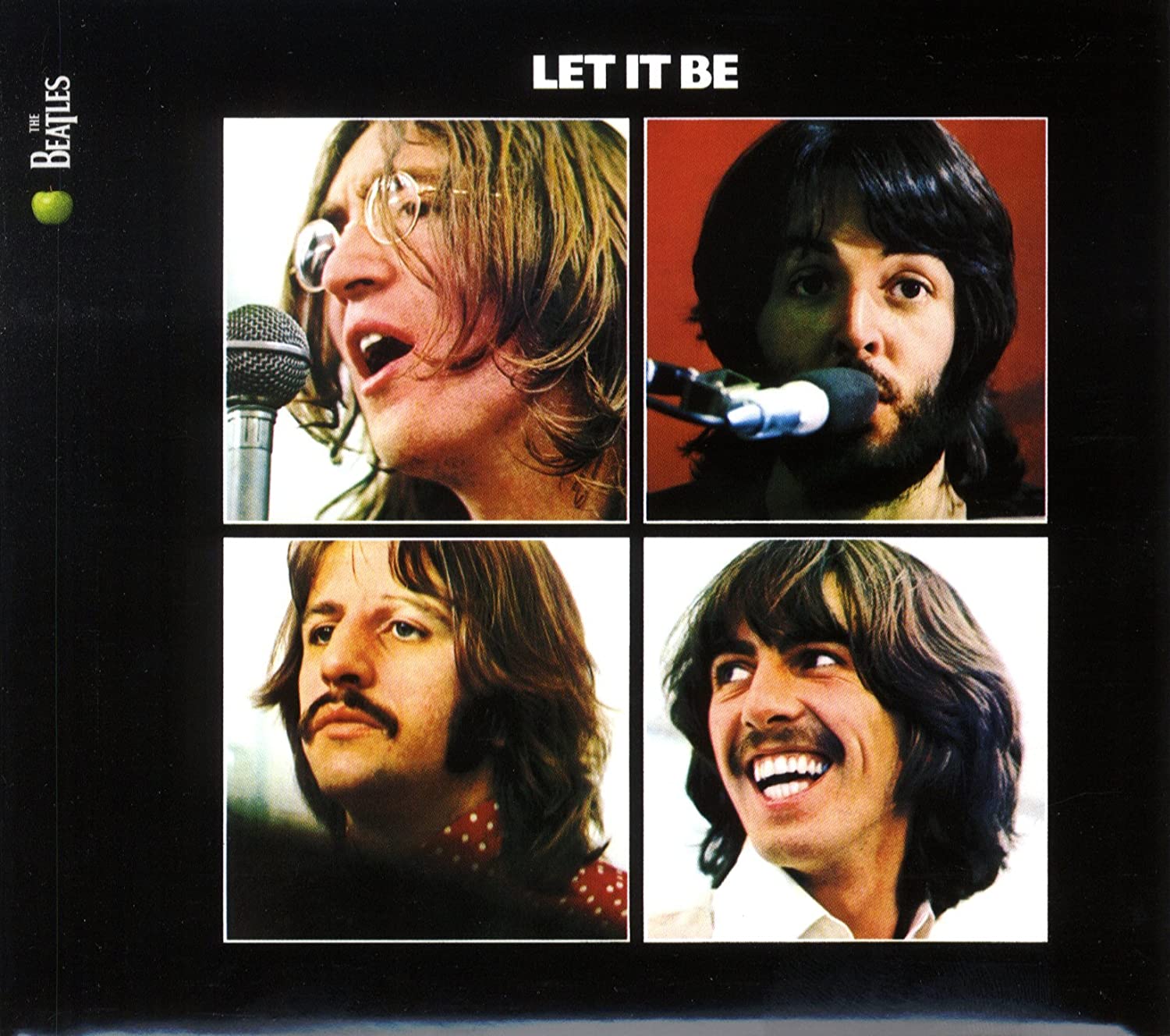
The Beatles “Let It Be”

Let It Be
Let It Be by The Beatles

I bought the LP in the early 1970s, the first CD on the day it was released in 1987, Let it Be …Naked in 2003, and the remastered CD in 2009. And now the Super Deluxe version is available on my streaming service. Every time you listen to a newly released version of Let it Be, it is like you hear it for the first time. And the amazing thing with the Beatles is that their music is fully up to that challenge. Every time you hear new things and understand their music a little better.

The Beatles "Let It Be Naked"
The Beatles “Let It Be Naked”

For You Blue

This time I was struck by the 2021 mix of the George Harrison song For You Blue. Of course it is a beautiful melody, the acoustic guitar playing by George is creative, and skilful and the drumming by Ringo low-key. What I did not realise before is that this is the only Beatles song where you can hear John play the steel guitar. And then Paul on the piano. What is he doing there? It is totally intuitive. Not something you have ever heard before.

The Secret of The Beatles Music

In The Secret of Their Music, the main chapter of my book The Beatles Era, A Quest for the Secret of The Beatles, I pay a lot of attention to their piano playing. Unfortunately the passage it too long to include here. Many other aspects of their music are discussed in that chapter and do believe that I have unravelled quite a bit of the secret of their music. New releases like Let it Be (Super Deluxe) make it clear, however, that the quest continues.

Peter

Get Your Copy of Peter’s book here

Posted on Leave a comment

John Lennon and Adelaide: A Love Story

Jimmie Nicol, a Ringo "lookalike", John, Paul and George in Adelaide
Jimmie Nicol, a Ringo “lookalike”, John, Paul and George in Adelaide

Adelaide can rightly claim to have honoured—and even enriched—Lennon’s life at times. For instance, Adelaide astronaut Andy Thomas used to enjoy listening to Sgt. Pepper’s in space. And in 1964, the Beatles had the biggest reception of their career, with 300 000 fans screeching like corellas along Anzac Highway to the Adelaide Town Hall.

Lennon described the Adelaide crowd as bigger than New York.

George Harrison and Paul McCartney both returned to Adelaide more than once in later years. Although tonsillitis prevented Ringo Starr from making it to Adelaide in ’64 (and made Jimmy Nicol an instant Beatle), Starr finally found his way here in 2013.

Lennon never revisited Adelaide, but Adelaide kept visiting Lennon.

Adelaide cameraman John Howard filmed the Beatles in Adelaide and also co-filmed the Beatles song ‘Revolution’ in London’s Twickenham Studios in 1968. During a break, Lennon approached Howard. They discussed Adelaide and Lennon said: “Jesus. I’ve never seen so many bloody people in my entire life.”

One of those bloody people, in the crowd at Adelaide Town Hall, was Chantal Contouri. The future international film and TV star found herself suspended from Adelaide High for escaping school to see the Beatles. Unfortunately for her, a front-page story in The Advertiser had quoted Contouri as saying “my school is a prison”.

Fast forward to London, 1969. Contouri was working as a waitress at the exclusive Revolution Club. She rubbed shoulders (and her pink suede boots) with the likes of the Rolling Stones, Raquel Welch and bands of brothers famous and infamous, from the Bee Gees to the Krays.

At the Revolution Club, Contouri became friendly with Lennon, who called her by her nickname, Chunky. He was unfailingly nice and polite and always said “thank you” to her.

Contouri arranged for a nervous Molly Meldrum to enter the club and meet Lennon for the first time. Meldrum proceeded to fall over and spill a drink on John and himself. Says Contouri: “John just laughed and then invited him to sit down.” A good friendship was born, thanks to an Adelaidean midwife.

A fellow Adelaide youth who saw Lennon in Adelaide and then London was Jim Keays, the charismatic frontman from Masters Apprentices. In ’64, Keays watched the Beatles travel in their open-top car along Anzac Highway. He froze when Lennon looked straight at him.

In 1970, Lennon made Keays freeze again. Keays was recording an album with the Masters at Abbey Road at the same time Lennon was recording his first solo album. Keays was left speechless when Lennon stood alongside him to pee at the Abbey Road urinal. “Because it was John Lennon, I couldn’t utter a syllable, and I went ‘Aaah, aah, waah, waah!’ And he finished his wee and walked out.”

Another time, Keays sneaked into Abbey Road’s Studio Two, where the Beatles recorded. He thought everyone was at lunch. To his surprise, Lennon was alone in the studio, so Keays hid behind some speakers and watched. “Lennon was fiddling around with a song, and he was singing, ‘A working-class hero is something to be.’ I thought, ‘Ah, that sounds good.’”

In a strangely similar pattern, Glenn Shorrock, lead singer with the Twilights and Little River Band, also experienced the Beatlemania on Anzac Highway. He then heard the Beatles record ‘Penny Lane’ at Abbey Road in 1967.

Shorrock, whose songs were ultimately produced by Beatles producer Sir George Martin, would later switch roles when Lennon listened to Shorrock’s music.

Enter May Pang. Lennon’s lover from 1973 to 1975 during his so-called lost weekend, Pang claims that she and Lennon continued to have secret trysts after Lennon and Ono re-united.

Jim Keays recreating his bathroom encounter with John Lennon. Photo: Michael X. Savvas

“In 1978,” says Pang, “John called me and asked me to come by for a visit. He told me there was a song on the radio that stuck in his head because it reminded him of us. He couldn’t remember the words, but he did know the tune and hummed it to me. That tune was ‘Reminiscing’ by [Adelaide’s] Little River Band, which surprised him. That became an ‘our song’ for us, and as it turned out, the last. Today, every time I hear the song, I know ‘Dr Winston O’Boogie’ is around.”

John Lennon’s son Julian is also convinced his father has shown him he’s still around. John had told him that after he died, he would reveal his presence through a white feather.

When Julian Lennon came to Adelaide in 1998, Aboriginal elders of South Australia’s Mirning people met him at Glenelg’s Grand Hotel. They presented Julian with a white feather (unaware of John’s statement about this). Julian felt John was watching over him, and as result, started his White Feather Foundation.

Perhaps John Lennon had revisited the site of his band’s greatest reception after all. 

Michael X. Savvas is co-author (with daughter Olivia Savvas) of One Dream Ago: The Beatles’ South Australian Connections (Single X Publications, 2010).

Get Your Copy of Michael and Olivia’s Book

Posted on Leave a comment

12th October 1962: Little Richard and The Beatles

Little Richard with The Beatles

The Beatles and Little Richard

Little Richard was The Beatles hero.

Out on stage was a lone black grand piano. Lined up behind it was Sounds Incorporated: two sax players, a guitarist, a bass player, drummer, and keyboard player with a Vox Continental electronic organ. All the musicians white guys, yet they looked so damn cool, so hip, in shiny Italian suits and real American ‘shades’. Their bodies, heads, hands, feet in ever-fluid locomotion, readying the audience for what was to come. Pumping out a single, pulsing, bass-heavy chord, over and over again, that made everything electric.

The atmosphere fully charged, crackled for release.

Bob Wooler Production

Bob Wooler’s voice purred into the microphone. His dulcet tones like shiny-black fur on a cat. A sudden wave of clapping and cheering, all but eclipsed his words: “Ladies and Gentlemen, NEMS Enterprises presents ‘A Bob Wooler Production’.” A roar erupted, enough to blow the roof off. “It’s the brightest star in all the Rock ‘n’ Roll galaxy! It’s…Little Richard…at the Tower!”

Then there he was. Little Richard.

Little Richard – Yeah, Yeah, Yeah!

Twisting. Twirling. Leaping. Strutting. Careening from one side of the stage to the other. And not one word yet, sung or screamed. There was only him—Little Richard. Black. Beautiful. Hair ‘conked’, moustache pencil-thin, smile utterly radiant; a rocking body not of this world; a whirling mass of energy—whooping, wheeling, waving, and bouncing nonstop. His sharkskin suit, shiny, sharp, attracting all eyes, both male and female.

And just when it seemed that nothing could cut through the riot and pandemonium in the auditorium, Richard skidded to a stop, twirled, and screamed: “Do you wanna hear it?”

The drummer cracked the snare. Richard screamed: “Yeah?” Everyone in the place screamed: “Yeah!”

Richard twirled, dived; screamed again: “Do you gotta hear it?” Screamed again: “Yeah?” Everyone screamed back: “Yeah!”

Richard shouted: “Do I gotta give it to you?” The crowd shouted: “Yeeeah!”

Lordy, Lord-dee

Then Richard let loose with a scream to end all screams—a long, drawn-out sound that slid up the scale, higher and higher and higher, until it broke into: “Lordy, Lord-dee, Lord-deee, Lord-deeee…Yeeeeaaaah!

Before the sound had time to echo off the walls, Little Richard ran full-pelt across the stage¾sliding, sliding, sliding¾until, magically, he came to a stop right beside the grand piano.

Aaaah-wop…bop-aah-wop!

He spun around, hit every note on the keyboard with a thundering hand and just stopped dead, a lone finger sounding, ringing out the lowest bass note. Then he threw back his glistening head and gave forth with a wild fevered cry that hit you like a drumstick in the eye. “Aaaah-wop…bop-aah-wop!”

Saxes, guitars, electronic organ, and drums slammed down the first beat of the bar. A wall of rocking, rolling, pulsating sound crashed over him like a tidal wave heralding the end of the old world and the coming of the new.

Tutti-Frutti

“Aaaah…Tutti-Frutti…” The magical incantation repeated over and over and over again until the last incandescent full-throated call for everyone to rock ‘n’ roll.

“Aaaah-wop…bop-aah-wop…bop-aah…Whoooooo!”

Little Richard stood at the keyboard his hands pounding up and down like pneumatic drills. Tireless. Relentless. Unstoppable. Hammering on and on and on. Smashing the piano keys with fists, elbows, his backside and his feet. Screaming, calling, whooping, squealing, singing songs Spike had only ever heard coming out of jukeboxes and record players. Singing with such force, such passion, such belief, it turned rock ‘n’ roll into a living breathing entity you’d willingly give your life to for as long as you lived.

Ripped It Up

Richard sang all his hits. He rocked it up. He ripped it up. He shook it up. He balled it up. He sang so long and so loud it made Spike’s ears ring and his head spin. And the only prayer Spike could pray was: “Dear God, please never ever let Little Richard finish. And if I gotta die, take me right now, right out of this towering cradle of rock.”

Boom-boom-boom-boom…Aaaah-lop-bam-boom!” 

Paul McCartney

PAUL McCARTNEY was in seventh heaven because, after Elvis, Little Richard was his ‘number one man’ and he the ‘number one fan’ and every time Richard squealed, whooped or screamed, he did, too. And for one magical moment, he was free to be a rocking schoolboy again, his heart filled to bursting with happiness and joy. Unable to contain himself, wanting to share the moment, he glanced over at John, a huge grin on his face.

John Lennon

JOHN LENNON—a huge grin on his face, too—stood, arms crossed, eyes narrowed, oblivious to all but Little Richard. Nodding in time to the beat. Not missing a thing. Marvelling at the black singer’s effortless display of command. Full of admiration at how Richard could hold the entire audience with a look, a nod, a grin, or a sneer. Then get everyone going again with a single shake of his head or a simple falsetto ‘Whooooooo!

Brian Epstein

BRIAN EPSTEIN nodded his head, almost in time with the beat. He couldn’t help but smile and feel more than a little pleased with himself. His ‘boys’ were playing the same stage as the great Little Richard and had more than held their own. It was nothing less than the passing of the torch, from one legend to the next, just as he’d always envisioned. Smiling, he turned, stopped short, stood staring at a good-looking young man in an ill-fitting stage suit. It was the same boy he’d seen coming out of Rex Makin’s office; the one he’d seen that night, in Hamburg; the one he’d been meaning to call. “Excuse me, but I think we’ve met somewhere, before, haven’t we?”

Tony Broadbent

Get Tony’s great book now

Posted on Leave a comment

The Beatles: In My Life

The Beatles In My Life
The Beatles “In My Life”

“In My Life” from Rubber Soul

“In My Life” is one of the most critically acclaimed Beatles songs, and one that John Lennon himself, so exacting and self-critical, called “my first real major piece of work.” The song was written in 1965, in part spurred by a conversation he had with a British journalist named Kenneth Allsop. Commenting in the David Sheff biography All We Are Saying, Lennon talked about the song:

I think “In My Life” was the first song that I wrote that was really, consciously about my life, and it was sparked by a remark a journalist and writer in England [Allsop] made after ‘[Lennon’s book] In His Own Write came out…. But he said to me, “Why don’t you put some of the way you write in the book, as it were, in the songs? Or why don’t you put something about your childhood into the songs?” Which came out later as “Penny Lane” from Paul – although it was actually me who lived in Penny Lane – and “Strawberry Fields.”

John Lennon on “In My Life”

Lennon first started writing lyrics as if he were on a bus from home, mentioning all the things he saw. He quickly saw that this was not working. From the same interview for All We Are Saying:

                And it was ridiculous…. [I]t was the most boring sort of “What I Did on My Holidays Bus Trip” song and it wasn’t working at all. I cannot do this! I cannot do this!

But then I laid back and these lyrics started coming to me about the places I remember. Now Paul helped write the middle-eight melody. The whole lyrics were already written before Paul had even heard it…. [His contribution melodically was the harmony and the middle eight itself].

Recording “In My Life”

When it came time to record the finished song in the studio, Lennon asked producer George Martin if he could write a Baroque-influenced piano solo for the song. Martin did this with beautiful Bach-sounding section that he could not play well at the tempo of “In My Life.” So, as an experiment, the solo was recorded at half speed, then played back at full speed and higher in pitch. It sounded not like a piano, but a harpsichord, and it worked memorably.

The song’s origin has often sparked speculation, parlor game style, about who Lennon was writing about. He never spoke of this, but years later Yoko Ono said that John wrote it for Paul. And over the years, it has been covered by innumerable artists, including Bette Midler. She didn’t sing “In My Life” then, but it would have fit.

What Can We Learn?

In challenging times our task is somehow to continue to do what we can, day by day, to be whole. Perhaps this can be nurtured by some reflection on “the people and things” that have mattered to us, that can help sustain us when it can feel like we are in basic survival mode. 

Tim Hatfield

Discover the meaning behind Beatles songs and how we can apply these lessons in our own lives in Tim’s great book.

httpss://www.youtube.com/watch?v=mBqqeqcJM_0
Posted on Leave a comment

The Beatles Merchandise: the Beatles Banjo?

The Beatles banjo
The Beatles banjo
The Beatles banjo

Beatles Merchandise – Part 2

Beatles merchandise was the subject of so much interest and fascination in the 1960s.

Beatles-themed musical instruments became hot ticket items to manufacture in the mid-1960s. One piece that went into production was the banjo. It seemed to be a stretch in keeping with the theme since the band did not feature that musical instrument. However, it did have a legendary connection to John Lennon, as his mother, Julia, taught him to play Buddy Holly’s classic, That’ll Be The Day, on her banjo. This appreciation of a stringed instrument carried his fascination over to the next instrument…the guitar.

The Beatles Banjo with its packaging

The Beatles Banjo

Mastro Musical Instruments in New York manufactured the 22″ long (56cm) piece. The instrument had four strings, accompanied by an instruction booklet (labeled as a “self-teaching method”). The creation was gold and cream with four headpins and a bridge. Along with facsimile signatures, the banjo’s white head exhibited headshots of each member of the group in either red or blue ink. The description on the skin read “The Beatles Banjo” with “Mastro Industries…The Beatles…Made in the U.S.A. under license.” The gold headstock displayed the words “Mastro Banjo” in red and blue ink.

Advert for The Beatles Banjo

Licensed by NEMS

The plastic banjo arrived either in a cardboard box or attached to a colorful sealed card. The creamy cardboard Mastro Banjo box measured 23½” x9½” x3¾” (59.5cm x 24cm x 9.5cm) and displayed a red and black print. Licensed by NEMS, the banjo initially sold for around $12. Additionally, Mastro included an official leaflet from Mastro, and it advertised various instrumental Beatles items for sale, including the Banjo, Bongos, and a Drum.

Mastro Industries Incorporated was located at 3040 Webster Avenue, New York 67, New York 10467. Their telephone number in the Sixties was 212-KI-7-5600.

Terry Crain

Read PART! here

Discover this and many more stories in Terry Crain‘s excellent book on Beatles Merchandise